





Smart Technologies in Robotic Welding
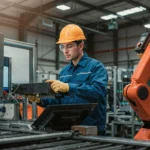
Robotic welding is evolving into a smart manufacturing capability that combines precision mechanics with digital intelligence. Modern systems increasingly use machine vision, seam tracking, adaptive process control, offline programming, real-time monitoring, and data analytics to improve weld consistency, reduce rework, and support higher production stability.
For technical buyers, the main advantage is not automation alone, but the ability to control and repeat the welding process with greater accuracy across changing part geometries, joint variations, and production volumes. Smart robotic welding systems can detect tolerances, adjust torch path and welding parameters, and maintain weld quality even in high-mix manufacturing environments.
These systems are also becoming more connected. Integration with production lines, sensors, workpiece positioning tools, and digital quality documentation allows manufacturers to capture process data, support traceability, and make faster engineering decisions on the shop floor. In practice, this helps improve throughput while lowering scrap, energy waste, and inspection effort.
Advanced robotic welding platforms now support multiple processes such as MIG, TIG, laser, and hybrid welding, giving manufacturers more flexibility to handle different materials, part thicknesses, and application requirements. Intelligent assistance features such as seam guidance, torch cleaning, camera monitoring, and adaptive correction are making robotic cells more reliable and easier to integrate into modern fabrication lines.
For manufacturers working toward smarter and more resilient production, robotic welding is no longer a standalone equipment choice — it is part of a broader strategy for operational efficiency, quality control, and digital manufacturing readiness. At ValMax 360, we see this as a core direction for the future of industrial fabrication.